Description
Apitherapy Practitioner and Hive Products Certificate
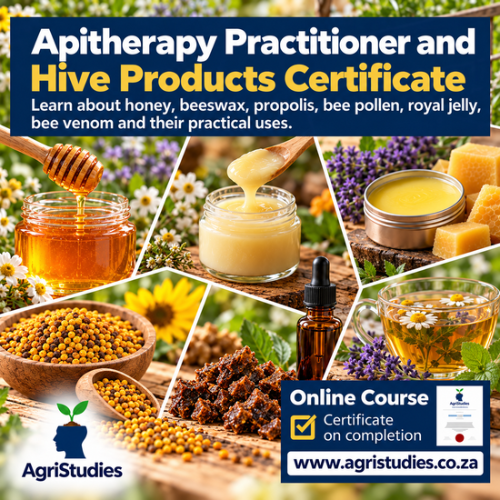
Discover the fascinating world of honey bees and natural hive products with our comprehensive online Apitherapy Practitioner and Hive Products Certificate.
This beginner-friendly course explores the science, traditional uses, safety considerations and practical applications of honey, beeswax, propolis, bee pollen, bee bread, royal jelly and bee venom.
Learn how hive products are produced, understand their composition and properties, evaluate scientific evidence, and recognise important allergy risks and professional boundaries.
The course also introduces practical skills such as preparing beeswax balms, understanding traditional honey blends, selecting quality ingredients, responsible product handling and developing a small hive-product business.
What You Will Learn:
- Honey bee biology and the origins of hive products.
- Traditional apitherapy practices and modern scientific research.
- Honey varieties, quality, properties and responsible uses.
- Propolis, bee pollen, bee bread and royal jelly.
- Beeswax cosmetic formulation, balms and salves.
- Bee venom science, allergy risks and professional safety boundaries.
- Traditional honey preparations and ingredient selection.
- Product quality, hygiene, storage and labelling.
- Responsible customer guidance and ethical advertising.
- Starting a small hive-product business with products and educational services.
Who Is This Course For?
Ideal for beginners, beekeepers, natural product enthusiasts, aspiring hive-product entrepreneurs and individuals interested in learning about apitherapy through a responsible, evidence-informed approach.
Study Online and Build Your Knowledge
Gain valuable theoretical knowledge and practical product-development skills through structured lessons, assessments and business-planning activities.
This certificate focuses on education, product safety and responsible non-clinical applications. It does not qualify graduates to diagnose or treat medical conditions or administer bee venom therapy.
Start your Apitherapy Practitioner and Hive Products Certificate and explore the potential of hive products, from understanding the beehive to developing your own responsible product range.
Course Duration: Approximately 15 hours
Study Method: 100% Online | Self-Paced
Estimated Completion Time: 3 weeks, depending on individual study pace.
Interested in keeping bees yourself? See our beekeeping course.
AGRISETA Accreditation is under the name Nosa Agricultural Services.
Service provider code AGRI/c prov/0459/13
Disclaimer:The Apitherapy Practitioner and Hive Products Certificate is provided for educational and informational purposes only. The course covers honey bees, hive products, traditional apitherapy practices, scientific evidence, product safety, preparation methods and basic business development.
This course does not replace professional medical advice, diagnosis or treatment. Completion of the certificate does not authorise learners to diagnose medical conditions, prescribe treatments, administer bee venom or perform regulated healthcare procedures.
Bee-derived products may cause allergic reactions, including severe or life-threatening anaphylaxis. Learners must not attempt home allergy testing, deliberate bee-sting treatments or venom injections. Suspected anaphylaxis requires immediate emergency medical assistance. Honey must never be given to infants under one year of age due to the risk of infant botulism.
Traditional uses and potential health benefits discussed throughout the course should not be interpreted as proven medical treatments. Scientific evidence varies, and no therapeutic outcomes or health improvements are guaranteed.
Practical activities and product formulations are intended for educational purposes. Learners are responsible for following appropriate hygiene, ingredient safety and storage practices. Products intended for commercial sale may require additional testing, safety assessments, suitable labelling and compliance with applicable laws and regulations.
The certificate recognises successful completion of the course requirements but does not constitute professional healthcare registration, statutory accreditation or a licence to practise medicine.
Business guidance, pricing examples and marketing strategies are educational and do not guarantee income, profitability or business success.
By enrolling in this course, learners acknowledge their responsibility to apply the information safely, remain within their level of competence and comply with relevant legal and professional requirements.
Course Overview
Course Overview
The Apitherapy Practitioner and Hive Products Certificate is a comprehensive, beginner-friendly online course that explores the fascinating world of honey bees and the valuable products of the hive.
Throughout this course, learners will discover the history and principles of apitherapy while exploring honey, beeswax, propolis, bee pollen, bee bread, royal jelly and bee venom. The course provides an understanding of their origins, composition, traditional applications and the scientific research surrounding their potential uses.
Students will also develop knowledge of product quality, safe handling, allergy awareness and responsible practices. Practical learning introduces the preparation of selected hive-based products, including beeswax balms, cosmetic formulations and traditional honey preparations.
The course also explores opportunities within the hive-product industry, covering basic product development, packaging, labelling, pricing and small-business planning.
With 11 structured modules, the course combines theoretical knowledge with practical applications, providing a well-rounded introduction to apitherapy, hive products and responsible entrepreneurship.
What You Will Learn
What You Will Learn
The Apitherapy Practitioner and Hive Products Certificate provides a comprehensive introduction to honey bees, hive products, their traditional uses, scientific evidence and responsible applications. Throughout the course, you will develop practical knowledge of product safety, preparation, customer guidance and small-business opportunities.
Introduction to Apitherapy: Explore the history of hive remedies, traditional practices, modern research and the importance of evidence-based understanding.
Honey Bee Biology: Understand the honey bee life cycle, hive organisation, communication, foraging and how bees produce different hive products.
Hive-Product Safety: Recognise allergies, adverse reactions, anaphylaxis risks, contamination concerns and the importance of responsible handling and storage.
Honey Varieties and Properties: Discover different honey types, their composition, quality, authenticity, traditional uses and important safety considerations.
Propolis and Its Applications: Learn about propolis composition, botanical origins, extracts, cosmetic formulations, traditional uses and allergy precautions.
Bee Pollen, Bee Bread and Royal Jelly: Explore how these products are produced, their nutritional composition, commercial forms, storage requirements and scientific evidence.
Beeswax Cosmetic Formulation: Learn about ingredient selection, formulation percentages and preparing simple lip balms, body balms, salves and cerates.
Bee Venom Science and Risks: Understand bee venom composition, biological effects, current research, severe allergy risks and the role of specialist venom immunotherapy.
Traditional Honey Preparations: Explore food-safe honey blends, oxymels, aromatic preparations, introductory mead concepts and responsible ingredient selection.
Responsible Product Guidance: Develop the ability to evaluate wellness claims, explain scientific uncertainty, recognise professional boundaries and identify when healthcare referral is necessary.
Product Quality and Labelling: Understand hygiene, packaging, batch records, shelf-life considerations, allergy information and honest advertising.
Hive-Product Business Development: Learn how to select products, calculate costs, establish selling prices and explore selling through markets, shops, WhatsApp and online platforms.
Educational Services and Workshops: Explore opportunities to offer honey tastings, introductory educational sessions, beginner balm-making workshops and responsible product guidance.
Practical Business Planning: Apply your knowledge by developing a simple business plan featuring three starter products and one educational service.
By the end of this course, you will have developed a well-rounded understanding of hive products, their responsible non-clinical applications and the practical considerations involved in developing a small hive-product enterprise.
Important: This certificate focuses on education, product safety and responsible applications. It does not qualify learners to diagnose or treat medical conditions or administer bee venom therapy.
Course Structure
Apitherapy Practitioner and Hive Products Certificate
Discover the world of bees and the products of the hive—from honey and beeswax to propolis, bee pollen, royal jelly, and bee venom.
This beginner-friendly course explores their history, traditional uses, scientific evidence, and safety. Learn how to prepare selected food and cosmetic products and explore opportunities to build a small hive-product business.
WHAT DOES AN APITHERAPY PRACTITIONER DO?
An apitherapy practitioner’s work depends on their training and local requirements. Activities may include educating people about hive products, explaining their uses and limitations, helping customers understand product choices, preparing suitable products, and presenting workshops.
Responsible practice includes recognising allergy risks, making accurate claims, and referring health concerns to qualified healthcare professionals.
This course provides education in hive products, safe preparation, and business basics. The certificate does not itself authorise medical diagnosis, treatment, or bee venom administration.
No previous knowledge is required.
MODULE 1: INTRODUCTION AND HISTORY
1.1 What is apitherapy?
1.2 The history of hive remedies
1.3 Bees in mythology and culture
1.4 The development of modern apitherapy
1.5 Traditional knowledge versus scientific evidence
1.6 Responsible practice and course boundaries
MODULE 2: UNDERSTANDING BEES AND THE HIVE
2.1 Honey bee biology and life cycle
2.2 The queen, workers, and drones
2.3 Communication and foraging
2.4 How bees produce honey, wax, royal jelly, and venom
2.5 How bees collect and process pollen and propolis
2.6 Ethical harvesting and sustainability
MODULE 3: SAFETY AND PRODUCT QUALITY
3.1 Allergies, sensitivities, and adverse reactions
3.2 Recognising anaphylaxis and seeking emergency help
3.3 Precautions for children, pregnancy, and existing health conditions
3.4 Medicines and potential interactions
3.5 Reliable suppliers, contamination, and adulteration
3.6 Hygiene, handling, storage, and deterioration
MODULE 4: HONEY—VARIETIES AND USES
4.1 Honey composition and properties
4.2 Raw, processed, monofloral, and multifloral honey
4.3 Manuka, thyme, lavender, eucalyptus, and regional honeys
4.4 Honey quality, authenticity, and grading
4.5 Traditional uses and evidence for cough relief and skin applications
4.6 Food honey versus medical-grade honey
4.7 Safe use, sugar considerations, and why infants under one year must not receive honey
MODULE 5: PROPOLIS
5.1 What propolis is and its role in the hive
5.2 Botanical origins and regional differences
5.3 Traditional uses and current research
5.4 Extracts, tinctures, balms, and oral-care products
5.5 Propolis in cosmetic formulations
5.6 Allergy risks, solvent safety, and storage
MODULE 6: BEE POLLEN, BEE BREAD, AND ROYAL JELLY
6.1 Bee pollen collection and composition
6.2 Bee bread and how it differs from pollen
6.3 Royal jelly production and composition
6.4 Evaluating claims about energy, immunity, focus, and healthy ageing
6.5 Fresh, dried, frozen, and encapsulated products
6.6 Allergy risks, handling, and storage
MODULE 7: BEESWAX AND COSMETIC PRODUCTS
7.1 Beeswax production, grades, and sourcing
7.2 Choosing carrier oils, butters, and ingredients
7.3 Measuring ingredients and understanding formulation percentages
7.4 Making simple lip and body balms
7.5 Making salves and cerates
7.6 Hygiene, preservation, and product stability
7.7 Packaging, labelling, and batch records
MODULE 8: BEE VENOM—SCIENCE AND RISKS
8.1 Bee venom composition and biological effects
8.2 Historical and contemporary uses
8.3 Evaluating research and treatment claims
8.4 Sensitisation, adverse reactions, and anaphylaxis
8.5 Specialist venom immunotherapy for sting allergy
8.6 Professional boundaries and referral
This is a theory-only module. Live-sting procedures, venom injections, dosing, and home allergy testing are excluded.
MODULE 9: TRADITIONAL PREPARATIONS AND BLENDING
9.1 Equipment, hygiene, and accurate measurement
9.2 Food-safe honey blends and flavour combinations
9.3 Oxymel: traditional honey-and-vinegar preparations
9.4 Aromiel and aromatic honey preparations
9.5 Essential oil safety and ingredient selection
9.6 Introduction to mead and responsible fermentation
9.7 Formulation records, storage, and shelf-life considerations
Mead is an optional adult activity. Practical work excludes recipes for ingesting essential oils.
MODULE 10: RESPONSIBLE APPLICATION AND GUIDANCE
10.1 Understanding customer interests and product needs
10.2 Reviewing claims about sleep, stress, focus, immunity, and digestion
10.3 Reviewing skin, joint, and circulation claims
10.4 Recognising when professional healthcare advice is needed
10.5 Explaining benefits, risks, and uncertainty honestly
10.6 Applying your knowledge through practical case studies
MODULE 11: PRODUCTS, SERVICES, AND BUSINESS BASICS
11.1 Choosing a simple hive-product business model
11.2 Honey products: packaged honey, honeycomb, tasting sets, food-safe blends, oxymels, and gifts
11.3 Beeswax products: lip balms, hand balms, body balms, salves, and cerates
11.4 Sourced products: propolis, bee pollen, bee bread, and royal jelly
11.5 Services: honey tastings, educational sessions, balm-making workshops, and product guidance
11.6 Product requirements, suitable labels, allergy information, and honest advertising
11.7 Basic costing, pricing, and selling through markets, shops, WhatsApp, and online
11.8 Planning three starter products and one service
Who Should Enroll
Who Should Enroll?
The Apitherapy Practitioner and Hive Products Certificate is designed for individuals interested in understanding honey bees, natural hive products and their responsible applications. Whether you are exploring a personal interest or developing practical business skills, this course provides accessible, beginner-friendly education.
This course is ideal for:
Beginners and Natural Product Enthusiasts: Individuals interested in discovering the properties, traditional uses and scientific evidence surrounding hive products.
Beekeepers and Honey Producers: Those wanting to expand their knowledge of honey, beeswax, propolis, pollen, royal jelly and responsible product development.
Aspiring Hive-Product Entrepreneurs: Individuals interested in developing honey products, beeswax cosmetics, gift collections or educational services.
Cosmetic and Skincare Enthusiasts: Those interested in learning about beeswax formulations, lip balms, body balms, ingredient selection and product safety.
Wellness and Holistic Health Enthusiasts: Individuals seeking an evidence-informed understanding of traditional apitherapy practices, safety considerations and professional boundaries.
Educators and Workshop Facilitators: Those interested in offering honey tastings, introductory hive-product education and beginner balm-making workshops within their competence.
No prior experience is required. The course introduces fundamental concepts before progressing to practical applications, responsible product guidance and basic business development.
Important: This certificate provides education in hive products and responsible non-clinical applications. It does not qualify learners to diagnose or treat medical conditions, administer bee venom therapy or practise regulated healthcare without the appropriate professional qualifications.



Reviews
There are no reviews yet.