Description
Course Overview
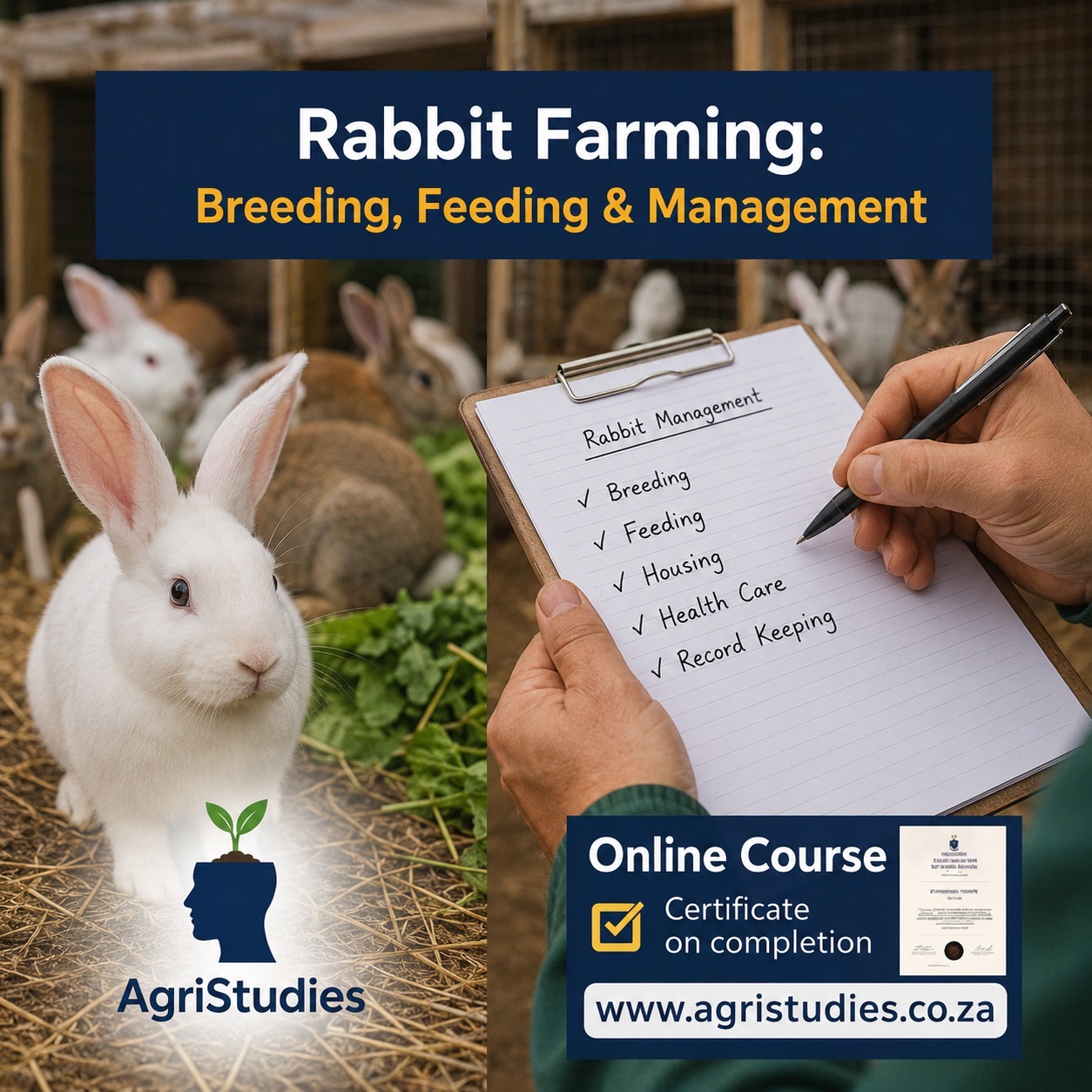
This Rabbit Farming: Breeding, Feeding & Management Course provides learners with the practical knowledge and management skills needed to successfully farm rabbits in both commercial and small-scale production systems. The course covers all major areas of rabbit production, including rabbit breeds, housing systems, breeding and reproduction, feeding and nutrition, rabbit health management, culling, manure management, tanning, and farm administration.
Learners will develop an understanding of how to manage rabbits efficiently while maintaining proper hygiene, animal welfare, disease prevention, and production performance. The course also focuses on practical rabbitry management, record keeping, production planning, and the utilisation of rabbit by-products to support profitability and sustainable farming practices.
By the end of this course, learners will have the skills and knowledge needed to establish, manage, and improve a productive rabbit farming enterprise.
Total Duration:
±25–40 Hours (4–6 Weeks Recommended)
Course Structure
This Rabbit Farming: Breeding, Feeding & Management Course is divided into 12 practical modules covering the complete rabbit production process.
Module 1: Introduction to Rabbit Production
- Introduction to rabbit farming
- Advantages of rabbit production
- Commercial vs backyard rabbit farming
- Rabbit production opportunities
- Basic rabbit production terminology
Module 2: Rabbit Housing Systems
- Importance of rabbit housing
- Rabbit hutches and rabbitry systems
- Cage requirements and floor space
- Ventilation and temperature management
- Bedding materials and sanitation
- Predator protection and security
- Indoor and outdoor housing systems
- Hutch design and layout planning
Module 3: Rabbit Breeds & Breed Identification
- Common rabbit breeds
- Meat-producing breeds
- Fur-producing breeds
- Pet and dual-purpose breeds
- Breed characteristics and selection
- Choosing suitable breeds for production goals
Module 4: Rabbit Breeding Systems
- Rabbit reproduction basics
- Breeding systems and mating methods
- Selecting breeding stock
- Doe and buck management
- Pregnancy and gestation
- Nesting and kindling
- Caring for young rabbits
- Weaning procedures
Module 5: Rabbit Feeding & Nutrition
- Nutritional requirements of rabbits
- Pellet feeding systems
- Green feeds and roughage
- Water requirements
- Feeding schedules and feed management
- Nutritional deficiencies
- Feeding breeding rabbits and young rabbits
Module 6: Rabbit Management Practices
- Daily rabbit management
- Rabbit handling techniques
- Hygiene and sanitation
- Stress reduction and animal welfare
- Environmental management
- Production planning
- Labour and workflow management
Module 7: Rabbit Digestive System
- Structure of the rabbit digestive system
- Digestion and nutrient absorption
- Importance of fibre in rabbit diets
- Digestive disorders
- Maintaining digestive health
Module 8: Culling & Selection
- Purpose of culling
- Identifying poor-performing rabbits
- Genetic defects and health concerns
- Production-based selection
- Humane culling practices
Module 9: Tanning & Rabbit By-Products
- Introduction to rabbit skin tanning
- Handling rabbit skins
- Basic tanning methods
- Utilising rabbit by-products
- Value-added rabbit products
Module 10: Rabbit Diseases & Health Management
- Common rabbit diseases
- Disease prevention and biosecurity
- Parasites and infections
- Signs of illness
- Vaccination and treatment basics
- Quarantine procedures
- Hygiene and disease control measures
Module 11: Rabbit Manure Management
- Benefits of rabbit manure
- Composting rabbit manure
- Using manure in crop production
- Manure handling and storage
Module 12: Record Keeping & Farm Administration
- Importance of production records
- Breeding records
- Feeding records
- Health and medication records
- Financial records and profitability
- Farm performance tracking
AGRISETA Accreditation is under the name Nosa Agricultural Services.
Service provider code AGRI/c prov/0459/13
What You Will Learn
By completing this Rabbit Farming: Breeding, Feeding & Management Course, you will learn how to:
Understand the fundamentals of rabbit farming and rabbit production systems used in commercial and small-scale farming
Identify common rabbit breeds and select suitable breeds for meat production, breeding, fur production, or dual-purpose farming
Understand rabbit housing systems, hutch design, ventilation, sanitation, bedding management, and predator protection
Apply rabbit breeding systems, mating methods, doe and buck management, nesting practices, kindling procedures, and weaning techniques
Understand rabbit feeding and nutrition, including pellet feeding systems, roughage requirements, feeding schedules, and water management
Apply practical rabbit management techniques, including daily care, rabbit handling, hygiene, animal welfare, environmental management, and workflow planning
Understand the rabbit digestive system, nutrient absorption, fibre requirements, digestive disorders, and digestive health management
Identify poor-performing rabbits and apply responsible culling, selection, and breeding improvement practices
Understand rabbit skin tanning methods, by-product utilisation, and value-added rabbit farming opportunities
Identify common rabbit diseases and apply disease prevention, biosecurity, parasite control, quarantine, and health management practices
Understand rabbit manure management, composting methods, manure handling, storage, and the use of manure in crop production
Apply record keeping, farm administration, production tracking, financial management, and profitability planning in rabbit farming
Course Structure
This Rabbit Farming: Breeding, Feeding & Management Course is divided into 12 practical modules covering the complete rabbit production process.
- Module 1: Introduction to Rabbit Production
Introduction to rabbit farming
Advantages of rabbit production
Commercial vs backyard rabbit farming
Rabbit production opportunities
Basic rabbit production terminology
- Module 2: Rabbit Housing Systems
Importance of rabbit housing
Rabbit hutches and rabbitry systems
Cage requirements and floor space
Ventilation and temperature management
Bedding materials and sanitation
Predator protection and security
Indoor and outdoor housing systems
Hutch design and layout planning
- Module 3: Rabbit Breeds & Breed Identification
Common rabbit breeds
Meat-producing breeds
Fur-producing breeds
Pet and dual-purpose breeds
Breed characteristics and selection
Choosing suitable breeds for production goals
- Module 4: Rabbit Breeding Systems
Rabbit reproduction basics
Breeding systems and mating methods
Selecting breeding stock
Doe and buck management
Pregnancy and gestation
Nesting and kindling
Caring for young rabbits
Weaning procedures
- Module 5: Rabbit Feeding & Nutrition
Nutritional requirements of rabbits
Pellet feeding systems
Green feeds and roughage
Water requirements
Feeding schedules and feed management
Nutritional deficiencies
Feeding breeding rabbits and young rabbits
- Module 6: Rabbit Management Practices
Daily rabbit management
Rabbit handling techniques
Hygiene and sanitation
Stress reduction and animal welfare
Environmental management
Production planning
Labour and workflow management
- Module 7: Rabbit Digestive System
Structure of the rabbit digestive system
Digestion and nutrient absorption
Importance of fibre in rabbit diets
Digestive disorders
Maintaining digestive health
- Module 8: Culling & Selection
Purpose of culling
Identifying poor-performing rabbits
Genetic defects and health concerns
Production-based selection
Humane culling practices
- Module 9: Tanning & Rabbit By-Products
Introduction to rabbit skin tanning
Handling rabbit skins
Basic tanning methods
Utilising rabbit by-products
Value-added rabbit products
- Module 10: Rabbit Diseases & Health Management
Common rabbit diseases
Disease prevention and biosecurity
Parasites and infections
Signs of illness
Vaccination and treatment basics
Quarantine procedures
Hygiene and disease control measures
- Module 11: Rabbit Manure Management
Benefits of rabbit manure
Composting rabbit manure
Using manure in crop production
Manure handling and storage
- Module 12: Record Keeping & Farm Administration
Importance of production records
Breeding records
Feeding records
Health and medication records
Financial records and profitability
Farm performance tracking
Who Should Enroll
This course is ideal for:
New and aspiring rabbit farmers wanting to start a rabbit farming business
Small-scale farmers looking to diversify their farming operations
Agricultural students wanting practical rabbit production knowledge
Homesteaders and backyard farmers interested in sustainable meat production
Entrepreneurs wanting to produce rabbits for meat, breeding stock, manure, or value-added products
Existing rabbit farmers wanting to improve breeding, feeding, and management practices
Individuals interested in rabbit health, housing, and welfare management
Farmers wanting to improve farm profitability through proper rabbit production systems
Learners interested in small livestock production and alternative farming enterprises
Anyone wanting to learn practical rabbit farming from beginner to intermediate level




Reviews
There are no reviews yet.